


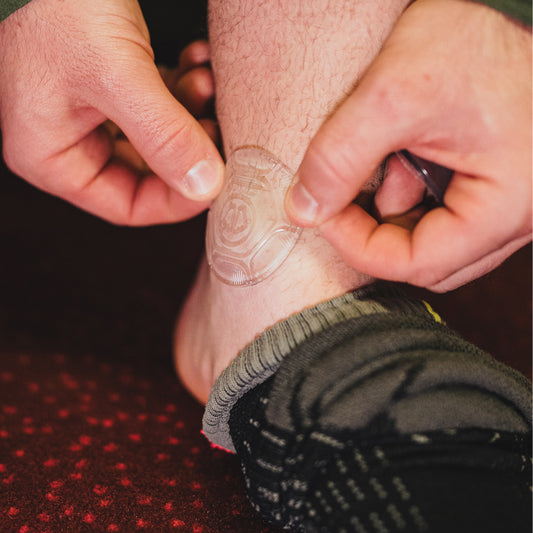

Why protecting your feet is essential
Whether you're running, hiking, trail running, skiing — or simply going about your daily life — your feet can be subjected to significant stress: friction, excessive pressure in certain areas (heel, toes, forefoot), moisture, impact, shearing, risk of damaged skin, blisters, black toenails, irritation or pain. Without proper protection, these stresses can ruin your comfort, cause injuries, reduce performance, or even make it impossible to go out. Foot protection (pads, blister plasters, toe protectors, heel protectors, creams, etc.) act as a discreet and effective shield: they prevent friction, distribute pressure, protect sensitive or fragile areas, and allow you to continue your activity in the best conditions, in complete comfort.
What our ‘Foot Protection’ solutions offer
- Prevention of blisters, friction & irritation — Anti-blister protection (gel, foam or silicone) reduces friction between the foot and the shoe, effectively preventing blisters and hot spots.
- Protection for sensitive areas (heel, toes, metatarsals, forefoot) — The heels, toes and forefoot are areas that are often put under a lot of strain. Targeted protection (cushions, padding) absorbs shocks, distributes pressure and reduces the risk of injury or irritation.
- Comfort and prolonged support—even over long distances or long days—By reducing mechanical stress and pressure points, this protection allows you to walk, run or ski for longer without pain or premature fatigue.
- Versatility for sports and everyday use — Whether you're trail running, hiking, skiing, walking, working on your feet or doing a series of activities, foot protection is the ideal additional protection, easy to carry and use.
- Injury prevention & foot care — beyond immediate comfort — By protecting the skin, limiting repeated trauma and reducing mechanical stress, these protectors help prevent blisters, calluses, skin injuries, irritation, marks and chronic pain associated with intensive use.
Who are these protectors for?
- Athletes (running, trail running, hiking, skiing, multisport) — especially: long outings, technical terrain, alternating efforts, shoe/activity transitions.
- People prone to blisters, irritation, and rubbing — sensitive feet, fragile skin, history of blisters, black toenails, pressure points.
- People who do a variety of activities throughout the day — standing work, urban walking, leisure outings, different types of footwear — who want their feet to be protected in all circumstances.
- For those who want to prevent rather than repair — effective protection should often be put in place at the first sign of discomfort to prevent simple rubbing from turning into an injury.
- For those who want to optimise the overall comfort of their equipment — shoes, insoles, socks + foot protection = an effective combination for performance, comfort and prevention.
Expert advice & best practices
- Always carry ‘emergency’ protection in your bag — blister plasters, toe protectors or pads: useful at the first signs of overheating, friction or sensitive areas. As Sidas reminds us, this is a smart preventive measure.
-
Adapt the protection to the affected area — heel, toes, metatarsals, forefoot: each area has its own constraints. Using the right protection ensures optimal comfort.
-
Don't wait for pain or blisters to appear before taking action — apply protection at the first signs (heating, redness, rubbing). This is often the best way to avoid aggravation or having to stop the activity.
- Combine protection + good footwear + suitable insoles/socks — to maximise effectiveness, your equipment must be consistent: well-fitting shoes, suitable insoles, technical socks, foot protection if necessary.
- Monitor the maintenance and condition of the protection—particularly thin pads or protections (gel, foam, silicone) can wear out or flatten: replace them when they lose their effectiveness.
FAQ (frequently asked questions)
When should I use foot protection — only when I have a blister or as soon as I feel friction?
It is most effective to use it at the first signs of rubbing or friction. This prevents blisters, hot spots or pain — it is prevention, not just treatment.
Are these protectors compatible with all types of footwear?
Yes — most protectors (plasters, pads, toe protectors, heel pads) are designed to fit sports shoes, hiking boots, city shoes and even boots or stiffer shoes, as long as the fit is correct and there is sufficient space inside.
Is protection enough to completely prevent blisters and pain if I run or hike often?
It greatly reduces the risk — but it is only one tool among many. Proper footwear, insoles/soles, technical socks, a good fit, foot care, hygiene — all of these play a role. Protective gear completes the equipment to maximise comfort and safety.
When should you replace or check your foot protection?
When it loses its padding, flattens, wears out, or no longer fulfils its function. A pad that is too old or frayed can become ineffective — monitor its condition, especially after intensive use.


