

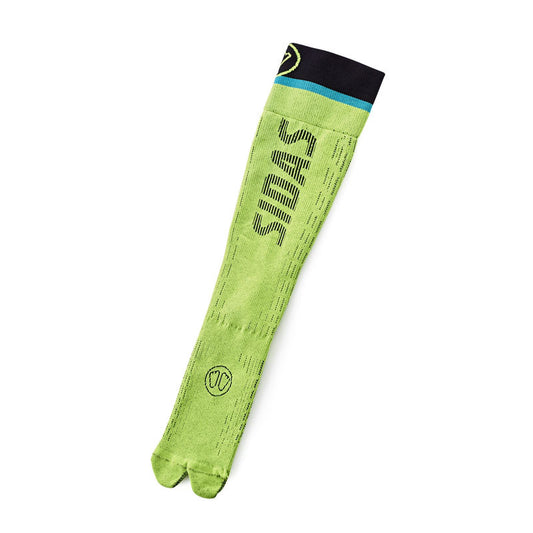


Why recovery socks are useful
After intense training, a long run, prolonged exertion or simply a day spent on your feet, your legs can suffer from heaviness, swelling, fatigue, soreness and a feeling of ‘heavy legs’. Recovery socks aim to improve venous return, facilitate blood and lymphatic circulation, drain toxins and lactic acid, and accelerate muscle recovery.
For runners, trail runners, but also for hikers, endurance athletes, regular exercisers or simply those who often end the day on their feet, they offer effective help in relieving the legs, reducing oedema or swelling, and promoting a quicker return to balance.
The benefits of SIDAS recovery socks
-
Improved circulation & drainage — Thanks to graduated compression (tighter at the ankle, lighter towards the calf), these socks stimulate venous and lymphatic return, helping to remove metabolic waste after exercise (lactic acid, toxins) and reduce the feeling of heavy legs.
-
Reduced muscle fatigue and soreness — By stabilising the calves, reducing muscle vibrations and limiting micro-trauma, they contribute to faster recovery, less muscle pain and a more comfortable return to training.
-
Less swelling, greater comfort — After a run, intensive training or a day on your feet, compression helps limit fluid build-up, reduces the feeling of heavy or swollen legs, and promotes a return to normal.
-
Faster recovery & safer return to activity — Some protocols show that wearing compression socks for 24 to 48 hours after intense exercise can improve functional recovery, reduce DOMS (delayed onset muscle soreness) and enable a more effective return to activity.
- Versatility — sport, training, recovery, everyday wear — Whether after running, trail running, hiking, cycling, or simply after a day on your feet, these socks are suitable for many situations.
Who are these recovery socks for?
- Runners, trail runners, endurance athletes — after long, intense sessions or long runs, to promote recovery and comfort.
- People with sensitive calves or legs — feeling of heaviness, swelling, poor circulation — or prone to muscle fatigue.
- Regular exercisers who train often and want to recover faster to get back to training sooner.
- Those who spend a lot of time on their feet or walking — hiking, work, travelling — and want to minimise fatigue and discomfort.
- For those seeking active and effective recovery — less soreness, more comfort, better recovery between sessions.
Expert advice & best practices
- Wear the socks immediately after exercise, ideally for 1 to 2 hours, then/or for 24–48 hours to maximise their effect on recovery.
-
Choose the right size and compression — too little compression will be ineffective; too much can restrict circulation. Ensure a good fit (ankle, calf).
- Use them in a targeted manner — after intense exercise, a run, a long day — rather than continuously for no reason, to avoid them becoming restrictive.
- Combine active recovery with good habits — hydration, stretching, nutrition, rest: recovery socks are one tool among many in a comprehensive approach to recovery and well-being.


